

 Experiences
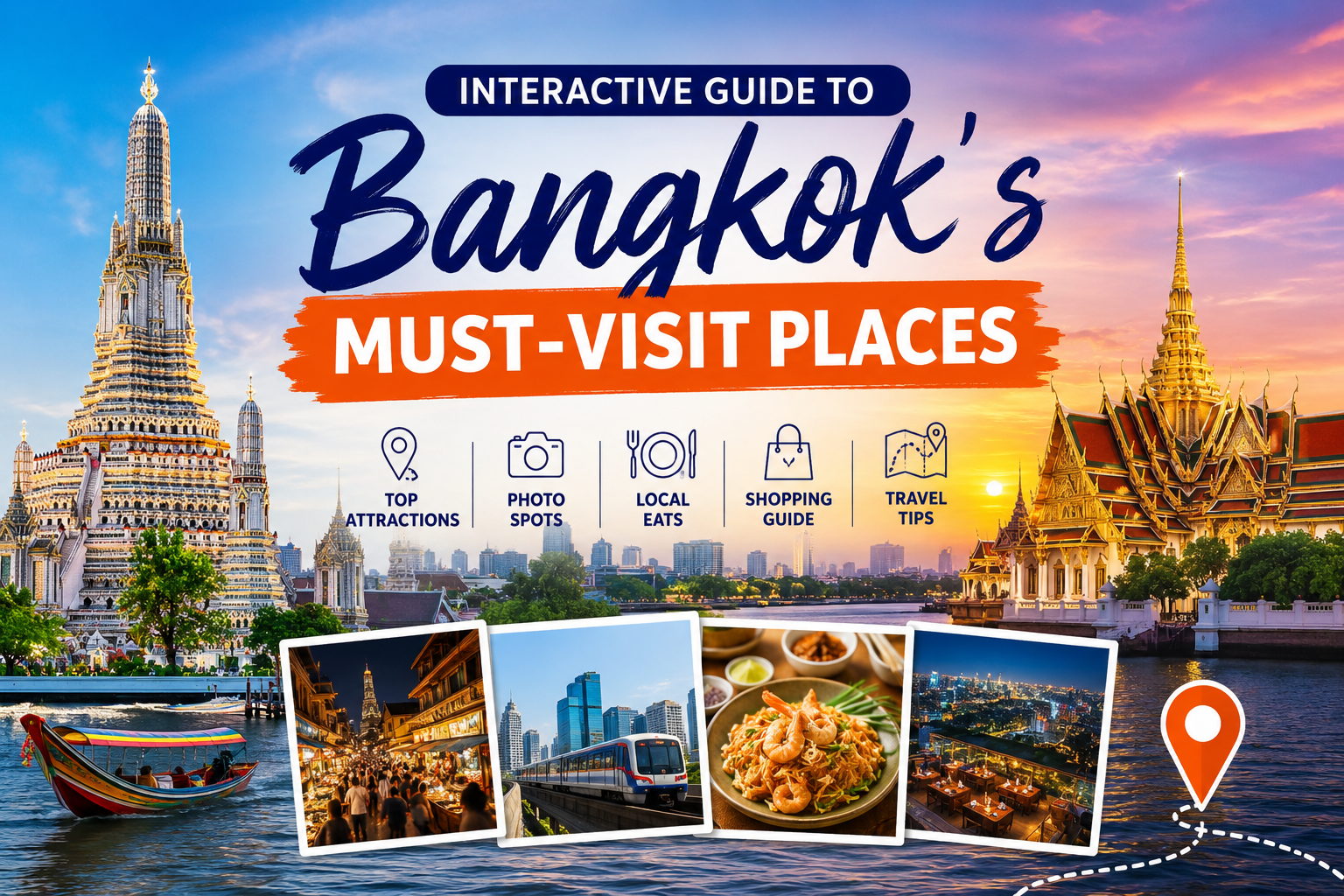
Bangkok shifts constantly between quiet spiritual sanctuaries and chaotic urban energy. Sorting through this massive metropolis often overwhelms first-time visitors trying to build a sensible route. This Interactive Guide to Bangkok’s Must-Visit Places offers a clear, spatial framework to map out your journey through Thailand’s capital.
Grouping destinations by neighborhood and transit lines saves precious hours. Using this logic allows travelers to get the most out of their limited schedule in 2026.
Moving across this sprawling city requires a basic grasp of transit geography. The Chao Phraya River serves as a natural boundary, separating the old royal districts from the glass skyscrapers. A structured approach lets you experience both historical charm and modern commerce without losing half your day in gridlock.
How to Use the Interactive Guide to Bangkok’s Must-Visit Places
Smart route planning depends entirely on matching nearby spots with transit hubs. This digital map breaks the city down into distinct zones so you never waste time doubling back. Users can toggle layers to see current operating hours, clothing requirements, and direct booking links.
To get the most value out of your sightseeing, keep an eye on these specific map tools:
- Transit Overlays: Check real-time links to the BTS Skytrain and MRT Subway networks.
- Temple Dress Alerts: Get clear reminders about clothing rules before visiting sacred grounds.
- Peak Hour Trackers: Review crowd patterns to bypass hours when tour buses arrive in droves.
Every district profile includes exact coordinates that load directly into your mobile map. Having these precise locations prevents communication mishaps when talking to local drivers. Mapping your rides this way helps you avoid unnecessary fares and keep your daily travel costs low.
Historic Temples in the Interactive Guide to Bangkok’s Must-Visit Places
The historic core of the city sits on Rattanakosin Island, home to the most sacred Buddhist sites in the country. The Grand Palace remains the crown jewel of local architecture, serving as the official royal residence since 1782. You will need at least three hours to wander the vast grounds and view the revered Temple of the Emerald Buddha.
A short walk away lies Wat Pho, celebrated for its giant forty-six-meter Reclining Buddha and its historic massage school. Walking between these two main landmarks takes less than ten minutes. Across the river stands Wat Arun, a stunning structure decorated with thousands of tiny porcelain pieces that catch the sunlight.
Keep these specific details handy when using this Interactive Guide to Bangkok’s Must-Visit Places to see the old city:
- Grand Palace: Entry costs 500 THB, open daily from 8:30 AM to 3:30 PM, and requires long pants.
- Wat Pho: Tickets cost 300 THB, open daily from 8:00 AM to 6:30 PM, and shoulders must be covered.
- Wat Arun: Admission is 200 THB, reached via a cheap 5 THB ferry crossing from Tha Tien Pier.
Proper behavior is required at every sacred site. You must take off your shoes before stepping into any building housing a Buddha statue. Cameras are forbidden inside the main prayer hall of the Emerald Buddha.
Bustling Markets in the Interactive Guide to Bangkok’s Must-Visit Places
Local trade happens on crowded streets, floating canals, and even active train tracks. Chatuchak Weekend Market is a massive outdoor shopping arena covering more than thirty acres with fifteen thousand individual stalls. Getting through this giant web of alleys requires a reliable map, though stalls are grouped broadly by items like fashion or home goods.
For a more classic canal experience, Khlong Lat Mayom and Taling Chan provide genuine local alternatives to the crowded tourist markets far outside town. These weekend spots center mostly around fresh grilled seafood and classic sweet treats. Renting a longtail wooden boat lets you see the surrounding waterways for just a few coins.
We have loaded these essential market tips directly into this Interactive Guide to Bangkok’s Must-Visit Places to simplify your shopping runs:
- Chatuchak Market: Head here on Saturday or Sunday between 9:00 AM and 6:00 PM for the full vendor lineup.
- Or Tor Kor Market: Found right next to Chatuchak, focusing on high-quality produce and premium sweet fruits.
- Pak Khlong Talat: This giant wholesale flower hub runs twenty-four hours a day, peaking with incredible color around midnight.
Most small vendors still run on cash. Even though some shops display QR codes for mobile transfers, carrying physical paper Baht in small bills makes transactions much smoother. Gentle haggling is normal at tourist stalls, provided you keep a warm smile on your face.
Modern Landmarks in the Interactive Guide to Bangkok’s Must-Visit Places
Away from the ancient shrines, a towering skyline of glass and steel dominates the city view. King Power Mahanakhon, one of the tallest buildings in town, features a dizzying glass skywalk suspended over three hundred meters high. Stepping onto that transparent ledge reveals a massive view of the endless city below.
IconSiam sits right on the riverbank, blending luxury shopping with a simulated indoor floating market called SookSiam. You can catch a free boat ride straight to this giant mall from the Sathorn Pier BTS station. Inside, visitors can sample regional street foods and purchase handmade goods in cool, air-conditioned comfort.
This quick breakdown compares what each modern spot offers to help you decide where to go first.
| Attraction Name | Main Highlight | Entry Cost | Closest Station |
|---|---|---|---|
| King Power Mahanakhon | Glass Skywalk Observation Deck | 880 THB | Chong Nonsi BTS Station |
| IconSiam | SookSiam Indoor Floating Market | Free Admission | Charoen Nakhon Gold Line |
| MOCA Bangkok | Modern Thai Art Exhibits | 250 THB | Bang Khen SRT Station |
| Jim Thompson House | Traditional Teak House Museum | 200 THB | National Stadium BTS Station |
Heading up to these spots in the late afternoon rewards you with a beautiful sunset over the urban horizon. Keep in mind that high-altitude rooftop spots require smart-casual outfits, meaning no gym clothes or flip-flops. Purchasing tickets online ahead of time often secures discounted rates compared to the gate price.
Navigating with the Interactive Guide to Bangkok’s Must-Visit Places
Your choice of transport determines how pleasant your day will be. The BTS Skytrain and MRT Subway networks offer clean, chilled cabins that cut directly through the busy shopping hubs. Running from 6:00 AM until midnight, these trains glide right past the worst gridlock on the roads.
Taxis and open-air tuk-tuks take you straight to your destination but require firm agreement on the price. Street cab drivers must use their electronic meters by law, so make sure they turn it on before you close the door. Using ride-hailing apps gives you a locked-in price and cuts out any language confusion entirely.
Drinking water constantly is a necessity because of intense humidity and heat that regularly climbs past thirty degrees Celsius. You can grab cold water bottles at neighborhood corner shops found on nearly every block. Keeping a small backup battery in your bag keeps your phone alive for maps and photos all day.
Relying on this Interactive Guide to Bangkok’s Must-Visit Places tames the chaotic puzzle of planning your Thai vacation. Sorting your daily visits by neighborhood preserves your energy and time.
Sticking to places near train stations takes the stress out of your commute. Always show respect by wearing modest clothing at temples and keeping your voice low and friendly during transactions. With these useful tips at your disposal, you can plunge straight into the thrilling rhythm of Bangkok.


Comments are closed